Vaginal Discharge: What’s Normal, What’s Not, and When Should You See a Doctor?


As a doctor, there is one question you can never run away from: vaginal discharge.
In an ideal world, we would all love to be discharge-free. We would love to never worry about stained underwear or wonder whether what we’re seeing is normal. But the reality is that vaginal discharge is a normal part of being a woman.
And I know that even after reading this blog, some of you will still ask me about it the day you walk into my consultation room and that’s perfectly okay.
Now, let me gently expose one of my friends. Can you believe she sent me a photo of her vaginal discharge while I was at home, finally relaxed and trying to enjoy my dinner?
My immediate response was, “Poor me… the cost of being a gynaecologist!”
As much as I wanted to be annoyed, that moment reminded me of something important: women genuinely want to know whether what they’re experiencing is normal. Many don’t know who to ask, and sometimes Google only leaves them more confused or frightened.
So, although I jokingly complained to her, I have to thank her because that picture inspired this blog.
Let’s talk about vaginal discharge: what is normal, what isn’t, and when it’s time to see your doctor.
One of the most common questions women ask is:
“Doctor, is this discharge normal?”
The truth is that vaginal discharge is completely normal. In fact, it is one of the ways your vagina keeps itself healthy. Yet many women feel embarrassed to talk about it or worry that every discharge means there is an infection.
Understanding your body is one of the greatest forms of self-care. Knowing what is normal and recognising when something has changed can help you seek treatment early and prevent complications.
Why Do We Have Vaginal Discharge?
The vagina is a self-cleaning organ. Healthy vaginal discharge helps remove dead cells and bacteria while maintaining a healthy environment.
The amount, colour, and consistency of discharge naturally change throughout your menstrual cycle because of hormonal fluctuations.
You may notice more discharge:
Around ovulation
During pregnancy
While using hormonal contraception
During sexual arousal
These changes are usually normal.
What Does Normal Vaginal Discharge Look Like?
Normal discharge is usually:
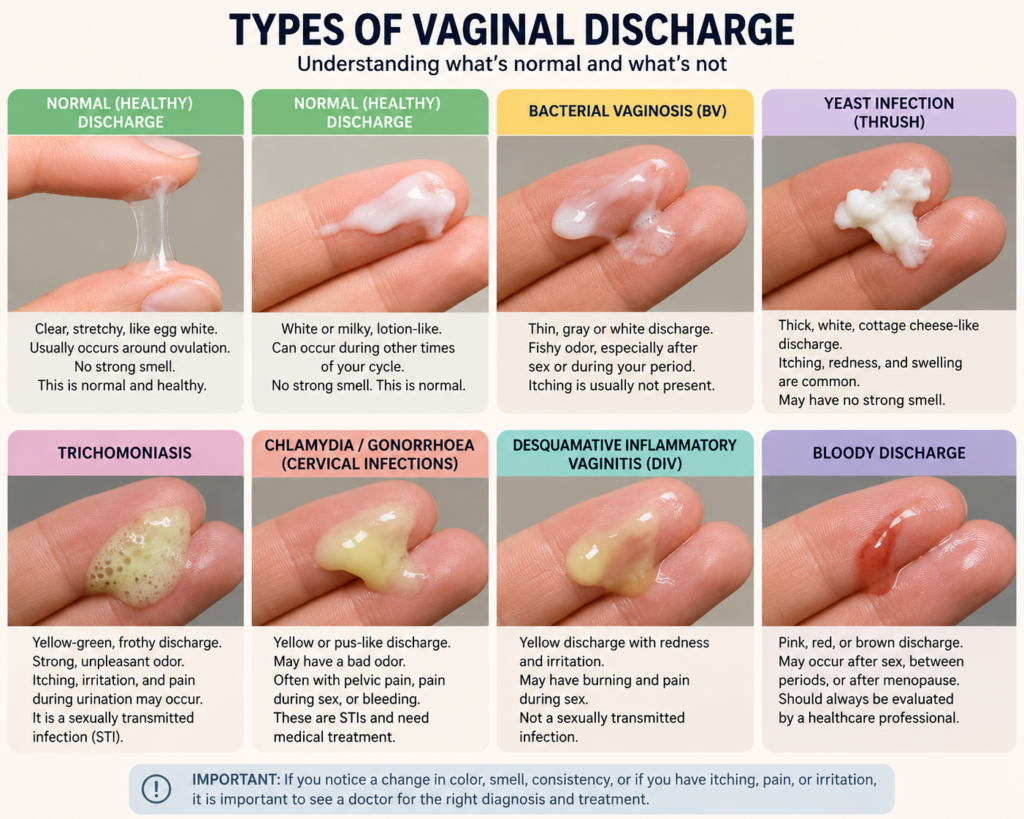
Clear, white, or slightly milky
Thin or slightly thick depending on where you are in your cycle
Mild smelling or odourless
Not associated with itching, burning, pain, or irritation
Remember, every woman is different. What is normal for one woman may be different for another.
When Is Vaginal Discharge Not Normal?
Abnormal discharge usually occurs when there is an imbalance in the vaginal environment or an infection.
Seek medical attention if your discharge is accompanied by:
A strong or unpleasant smell
Itching or burning
Pain during urination
Pain during sexual intercourse
Lower abdominal or pelvic pain
Fever
Bleeding after sex
Green, yellow, grey, or blood-stained discharge
Thick, cottage cheese-like discharge with severe itching
These symptoms should never be ignored.
Common Causes of Abnormal Vaginal Discharge
1. Bacterial Vaginosis
BV is the most common cause of abnormal vaginal discharge in women of reproductive age. It occurs when the normal balance of bacteria in the vagina changes. It is not considered a sexually transmitted infection.
Common symptoms include:
Thin grey or white discharge
A fishy smell, often more noticeable after intercourse
Usually little or no itching
2. Vaginal Thrush (Candida)
Thrush is caused by an overgrowth of yeast and is the second most common cause of vaginitis. It is also not usually sexually transmitted.
Symptoms include:
Thick white discharge that resembles cottage cheese
Intense itching
Redness and soreness around the vulva
Pain during intercourse or urination
Women are more likely to develop thrush during pregnancy, after antibiotics, with poorly controlled diabetes, or if they are immunocompromised.
3. Trichomoniasis
Trichomoniasis is a sexually transmitted infection (STI) caused by a parasite.
Symptoms may include:
Green or yellow frothy discharge
A strong unpleasant smell
Vaginal itching
Pain during urination
Sexual partners also require treatment.
4. Sexually Transmitted Infections
Infections such as chlamydia and gonorrhoea may also cause abnormal discharge. Some women have no symptoms at all, while others experience:
Yellow or pus-like discharge
Bleeding after intercourse
Pelvic pain
Pain during urination
If left untreated, these infections can lead to pelvic inflammatory disease (PID), infertility, chronic pelvic pain, and ectopic pregnancy.
Should You Use Feminine Washes?
Many women believe they need scented washes, douches, or vaginal cleansing products to stay “fresh.”
The truth is-you don’t.
The vagina is designed to clean itself. Vaginal douching, perfumed soaps, deodorants, and scented products can disrupt the natural vaginal bacteria and actually increase the risk of infections.
Instead:
Wash only the outside (vulva) with water or a gentle, fragrance-free cleanser.
Wear breathable cotton underwear.
Avoid staying in wet clothing for prolonged periods.
Avoid unnecessary antibiotics unless prescribed.
When Should You See a Healthcare Professional?
Please don’t self-diagnose based on what you read online or treat every discharge with over-the-counter medication.
Book an appointment if:
Your discharge has changed suddenly.
You develop itching, pain, or a bad smell.
Symptoms keep coming back.
You are pregnant and notice abnormal discharge.
You think you may have been exposed to an STI.
Your healthcare professional may recommend a pelvic examination, vaginal swabs, STI screening, or other tests depending on your symptoms.
The EPIFEM Takeaway
Your vaginal health is an important part of your overall wellbeing.
Not every discharge is a sign of infection, and not every infection looks the same. Learning what is normal for your body empowers you to recognise when something changes.
At EPIFEM, we encourage women to have open conversations about intimate health without shame or embarrassment. The earlier a problem is identified, the sooner it can be treated, protecting not only your comfort but also your fertility and long-term reproductive health.
Know your normal. Notice changes. Seek help early. Your health matters.
Please leave a comment and share link with other women
Love

4 thoughts on “Vaginal Discharge: What’s Normal, What’s Not, and When Should You See a Doctor?”
Comments are closed.
Thank you Doc for such an informative article on discharge 🥹. What happens when you don’t see any discharge on your underwear, does that call for concern?🤔🤷🏾♀️
Thank you for reading! Not seeing discharge on your underwear isn’t usually a cause for concern. Every woman is different, and the amount of discharge naturally varies for some is way minimal. As long as you don’t have symptoms like vaginal dryness, itching, burning, pain, or an unpleasant odour, it’s generally considered normal. 😀.
Thank you so much Dr Nshali for this info. I think my favorite highlight of the blog was the issue of feminine washes pertaining vaginal health. As an OBGYNAE, do you recommend vaginal steaming for period pains or any other reproductive health concerns such as getting rid of fibroids or cysts?
Thank you for this question. I will do a special blog feature